Rebuilt a 25-year national perioperative training program into a more scalable, consistent learning ecosystem used across 2,500+ healthcare facilities.
● Periop 101
Scale + Signal
▸ 2,500+ healthcare facilities
▸ 45,000+ program graduates
▸ 12,000+ annual enrollments
▸ 27 modules across 3 learning pathways
▸ 25+ year legacy program
▸ 11% to 100% program completion in 5 months
▸ 96% reduction in UI inconsistencies
▸ 60% increase in learner satisfaction
▸ Recognized as part of a Newsweek Top 50 Online Learning Provider
Program Landscape
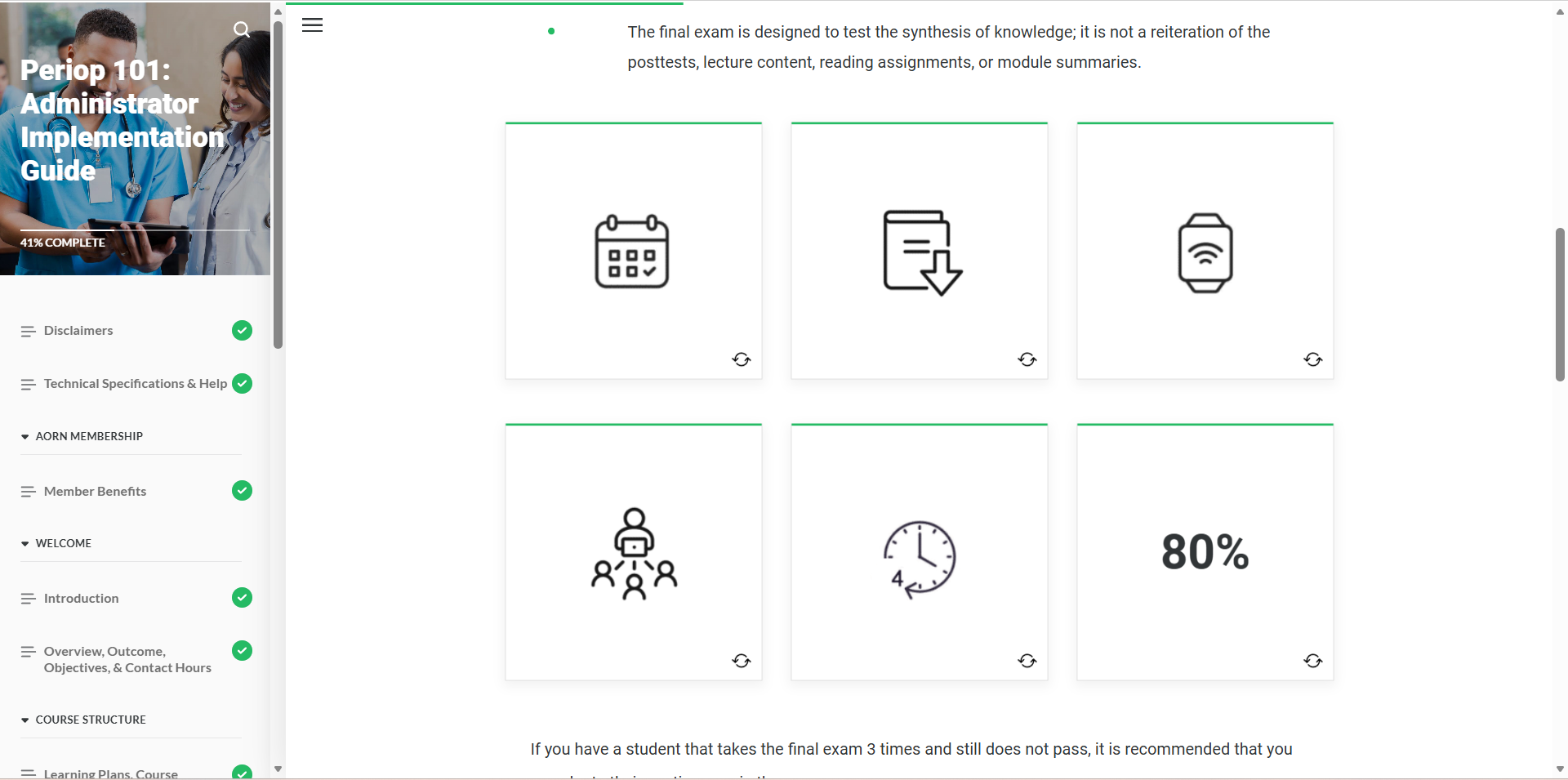
Periop 101 is AORN’s flagship perioperative training program, used globally to prepare nurses for the operating room.
After more than 25 years of outsourced development, the program was brought in-house for modernization. Ten months into the effort, only 11% of the redesign was complete and the program was at risk of missing another major deadline.
The problem was bigger than course development. Production lacked clear ownership, consistent workflows, cross-functional alignment, and the operating model needed to support a national learning product at scale.
From legacy program to scalable learning system. The program also grew ARR by $3.6M (to $8.4M), increased renewals 9% (to 96%).
Periop 101 shifted from fragmented production and inconsistent delivery to a more structured, scalable learning ecosystem.
The redesign improved learner readiness, administrator confidence, UX consistency, evaluation quality, and operational delivery across a national clinical training program.
*Opens in SCORM Cloud
Sr. Manager of Digital Learning Strategy & Design
My Role
I led a team of 6 designers and partnered with SMEs, administrators, and cross-functional stakeholders to redesign the learning ecosystem, rebuild production workflows, modernize the learner experience, and scale delivery across content, LMS platforms, and evaluation systems.
What I Built
▸ 27 modules across 3 learning pathways
▸ Design system + standardized templates
▸ Study guides + exam prep tools
▸ Tiered administrator support
▸ Administration Implementation Guide
▸ Learner Guide
▸ Production + review workflows
▸ Module-level evaluation system
▸ Inclusive design + accessibility standards
▸ Cross-functional delivery model
Six high-leverage transformation areas
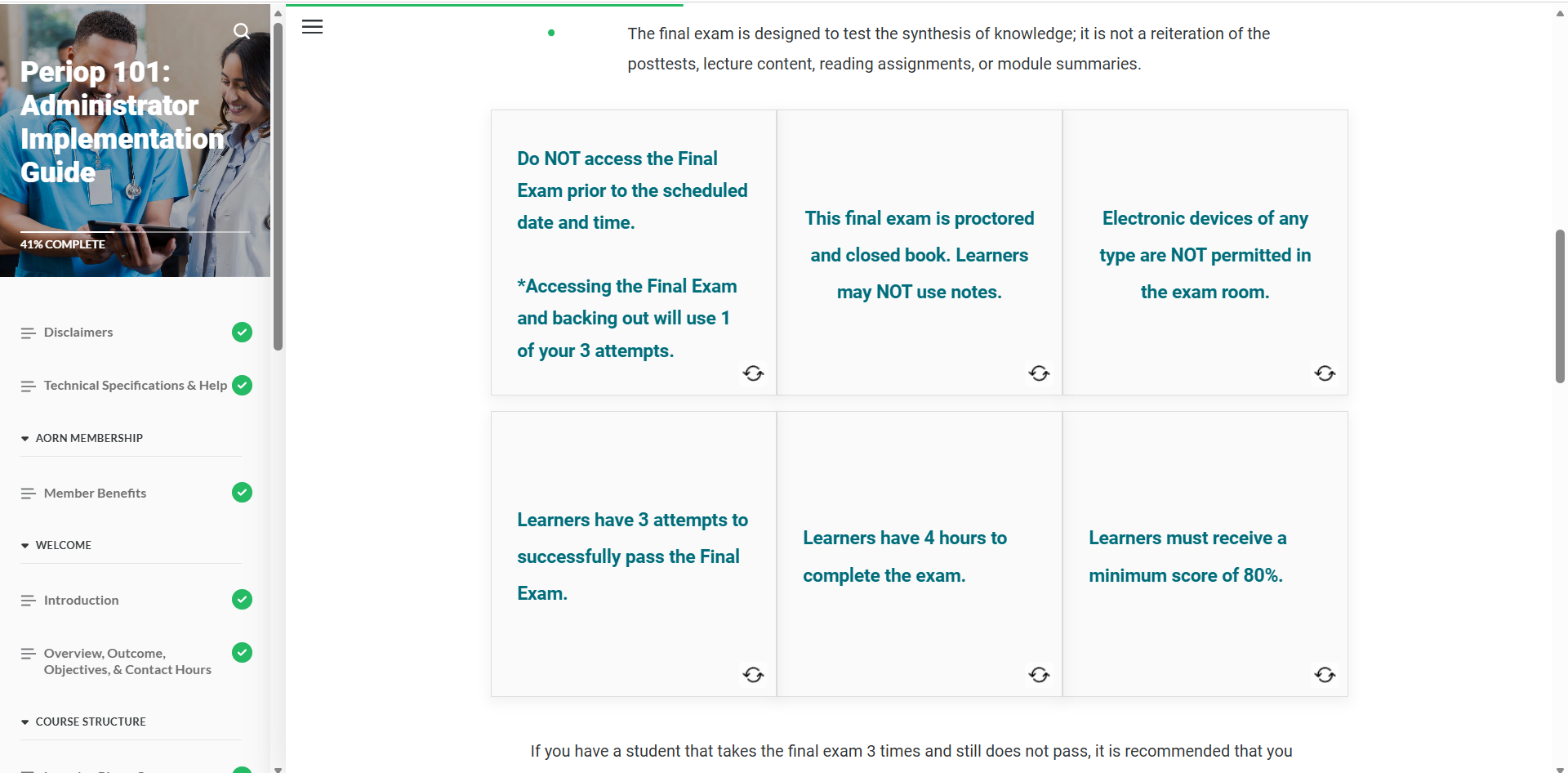
Assessment Readiness
Learners lacked a clear path to prepare for the 100-question final assessment.
I built study guides, exam prep tools, and an assessment-to-content crosswalk.
Impact:
▸ + 22% first-attempt pass rates
▸ - 17% unnecessary retakes
Administrator Support
Support was one-size-fits-all despite very different administrator needs.
I introduced tiered webinars, release notes, and implementation guidance.
Impact:
▸ 3/5 → 4.9/5 webinar satisfaction
▸ More consistent implementation support
Evaluation Strategy
Feedback came too late to guide meaningful improvement.
I moved evaluation to the module level and separated content, UX, and navigation feedback.
Impact:
▸ 17% → 98% evaluation completion
▸ More actionable feedback
Operating Model
The program had stalled without a clear production and review system.
I rebuilt the operating model with defined stages, ownership, and review workflows.
Impact:
▸ 11% → 100% completion in 5 months
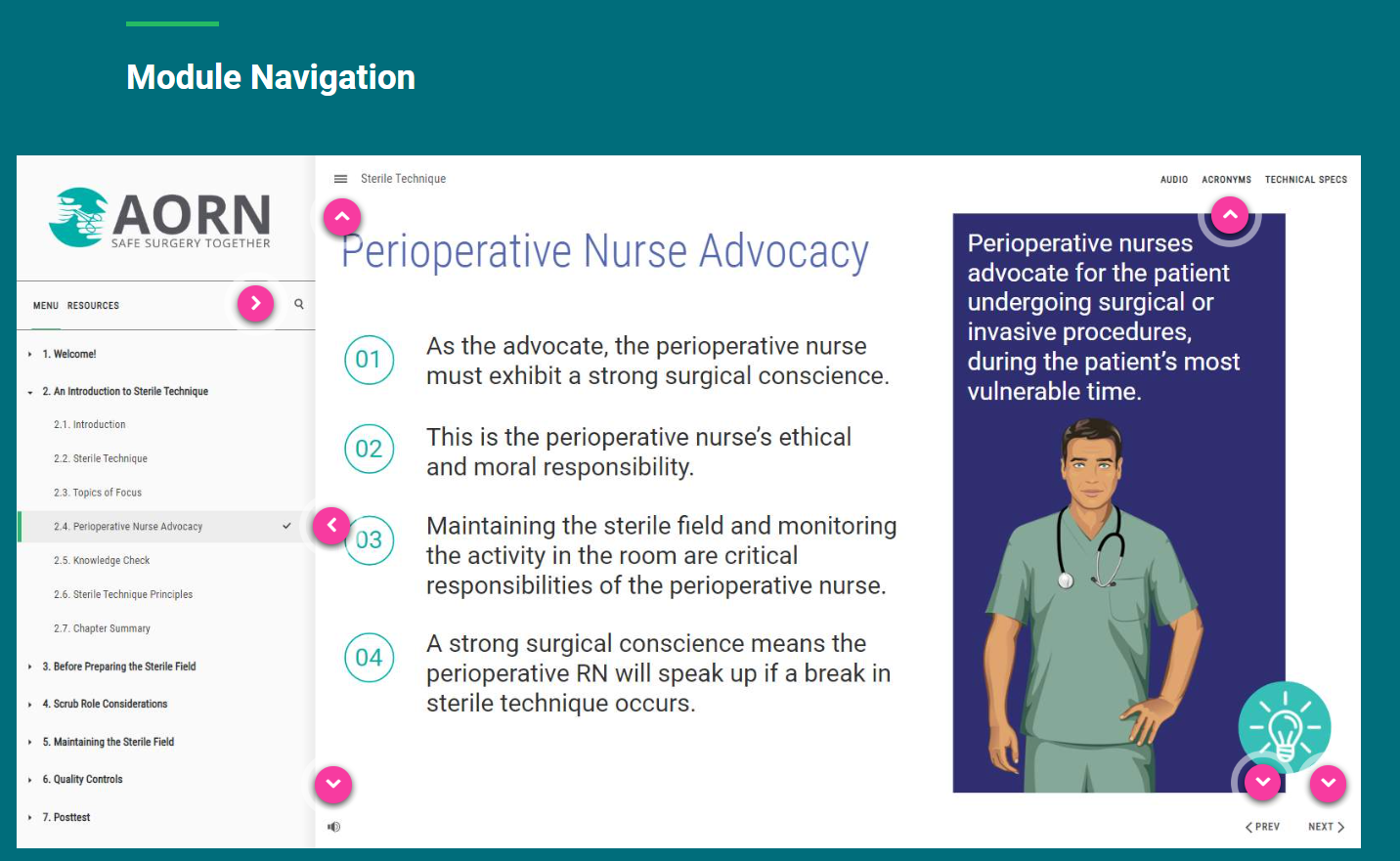
Learning Experience + UX
Navigation, structure, and interaction patterns varied across modules.
I created a design system with standardized templates, navigation, and interactions.
Impact:
▸ 96% reduction of UI inconsistencies
▸ More consistent, predictable learner experience
Inclusive Design
Representation and accessibility were inconsistent across the learning experience.
I embedded inclusive design into content, imagery, terminology, and review workflows.
Impact:
▸ Inclusive design became part of the system
▸ Not a final-stage check